Call us 24/7+86 18150137010
Welcome to Industrial Control Trading Co., Ltd. Email: itadcs@163.com Whatsapp:+86-17750137010
Call us 24/7+86 18150137010

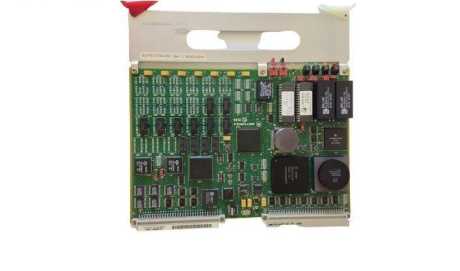
LAM CPU processor board 810-017034-005

LAM  CPU processor board  810-017034-005

The part number 810-017034-005 refers to a VME CPU Processor Board used in Lam Research semiconductor manufacturing equipment.

It is a critical control component, typically part of the “Envision” series or similar legacy control systems used to manage the complex operations of etching or deposition tools.

Key Specifications

Manufacturer: Lam Research (often manufactured by Motorola or OEM partners for Lam).

Component Type: PCBA (Printed Circuit Board Assembly) / CPU Module.

Architecture: VMEbus (Versatile Backplane Eurocard), which is a standard industrial computer bus.

Processor: Features a Motorola 68030 microprocessor.

Application: Used for system-level processing and communication within the tool’s electronics rack.

Associated Part Numbers

In the semiconductor industry, you may see this part cross-referenced with these numbers:

605-017034-110

853-017034-110

Common Equipment Use

This CPU board is commonly found in older but still widely used Lam Research platforms, such as the Rainbow or Alliance series systems, specifically those utilizing the Envision controller interface.

Technical Note: Because this is a legacy electronic component, it is highly sensitive to Electrostatic Discharge (ESD). If you are handling or replacing this board, ensure you are using a grounded wrist strap and proper ESD protocols.

LAM 810-069751-114 RF/DC interface board

LAM Research 810-069751-114 is an RF/DC Interface PCBA specifically designed for the LAM 2300 series (including Flex, Kiyo, Versys) and Alliance platforms.

In the semiconductor etching process, the main task of this board card is to serve as a communication link between the machine’s main control system and the radio frequency (RF) generator or DC bias power supply.

1. Core technical functions

The 810-069751 series board card is a key link in the control chain of the process Chamber.

RF control signal distribution: It receives instructions from the autonomous CPU and converts them into analog or digital signals that the RF generator can recognize, which are used to control the on/off and power regulation of the plasma.

Status monitoring: Real-time monitoring of the feedback signals of the RF system (such as reflected power, forward power) to ensure the stability of the plasma during the etching process.

Safety Interlock (Interlock) : If the RF Match Network or power supply fails, this board card will immediately cut off the signal through the hardware link and issue a pause command to the system (and KUKA robot) to prevent damage to the wafer.

810-069751-114

2. Position in the KUKA robot system

In the KRC2 controller architecture you mentioned earlier, 810-069751-114 belongs to the feedback layer of the execution end:

Ready signal: When the KUKA robot feeds the wafer into the chamber and exits, the host starts the RF process through this board card.

Process completion notification: Once the board detects that the RF power has dropped to zero and the process is complete, it will send a signal to VIOP III (810-046015-010), and then DSE-IBS will notify the robot that it can enter the chamber to retrieve the wafer.

810-069751-114

3. Meaning of Model Suffix (-114)

The part number suffix of LAM usually represents different hardware revision versions or specific process matches:

-114 usually represents Revision B or C, which improves electromagnetic compatibility (EMC) on the basis of the earlier -00x or -110 versions. As this board operates near a high-frequency RF environment, the -114 version has enhanced the shielding performance to prevent high-frequency noise from interfering with other sensitive boards (such as analog AIO boards) on the VME bus (810-066. 590-004).

4. Common Fault Manifestations

If 810-069751-114 is damaged or aged, the following usually occurs:

“RF On Failure” : The system issues the startup command, but the generator does not respond.

“RF Reflection High” (False alarm of excessive reflection power) : In fact, the RF matching is normal, but the feedback voltage collected by the board card deviates, causing the system to shut down protectively.

Communication timeout: This causes the KUKA robot to remain in a state of “waiting for the process to start” for a long time after completing the wafer placement.

Maintenance suggestions

Clean the connectors: This board card is usually connected to multiple sets of ribbon cables. As there may be trace amounts of corrosive gas in the etching workshop, it is recommended to regularly check the interfaces for any green signs of oxidation.

Check with the power supply: As it requires a stable low-voltage direct current to process signals, if the output of the PH1003-2840 power supply is unstable, it will cause the RF control signal to jitter, directly affecting the uniformity of etching.

Your LAM system puzzle update

At present, you have collected the following core links

Power layer: PH1003-2840

Transport/Structural Layer: 810-066590-004 (Backplane)

Control/Clock Layer: 810-072907-005 (Clock Controller)

Input/Output Layer: 810-046015-010 (VIOP) & 810-099175-012 (AIO)

Execution interface layer: 810-069751-114 (RF interface)

Robot motion layer: DSE-IBS 3.02 & KSD1-08

LAM 810-072907-005 VME Communication and Clock Controller board

LAM Research 810-072907-005 is a dedicated VME Communication/Clock Controller board.

It is commonly found in LAM Alliance and 2300 series machines (such as Kiyo and Flex).

It plays the roles of “traffic police” and “metronome” in the system.

Combined with the KUKA KRC2 robot component you mentioned earlier, this board card ensures that the data exchange between the robot and the host system is synchronous and orderly.

1. Core technical functions

In the VME control chassis, the 810-072907-005 is mainly responsible for the following tasks

System Clock Generation: Provide uniform synchronization pulses for all boards on the VME bus (including the VIOP III and AIO analog boards you mentioned earlier).

If the clock signal is unstable, the handshake signal between the robot and the host will be delayed.

Bus Arbitration: When multiple boards (such as KUKA’s DSE communication card and LAM’s I/O card) simultaneously attempt to send data to the CPU, the board decides which one to send first to prevent system crashes caused by data collisions.

Watchdog Timer: Monitors whether the main program is running normally.

If the system freezes, it will send a reset signal, which is usually one of the reasons why KUKA robots suddenly report “communication interruption”.

810-072907-005

2. Integration logic with KUKA robots

In the process of semiconductor wafer transmission, accuracy and timeliness come first.

Synchronization: The DSE-IBS (00-117-336) of the KUKA robot must receive instructions from the host within an extremely strict time window. 810-072907-005 ensures the low latency of this communication link.

Error handling: If this board card detects a VME Bus Error, it will immediately block all outputs, which will trigger the “Emergency stop (E-Stop)” state of the KUKA robot.

3. Common Fault Manifestations

If 810-072907-005 malfunctions, it usually manifests as “global” chaos:

“System Heartbeat Lost” : Even if the power supply (PH1003-2840) is normal, the host software cannot start, or crashes immediately after starting.

Random “Bus Error” alarm: The robot may have been running normally for several hours, but suddenly a communication error is reported, and the fault may disappear after a restart.

Abnormal LED status: On the front of the board card, there are usually RUN (green light) and FAIL (red light). If the red light remains on constantly, it indicates that the self-check of the board card has not passed.

810-072907-005

4. Maintenance and Spare Parts Suggestions

Version match: -005 is a specific revision of this series. When replacing spare parts, the suffixes must be strictly consistent because the bus frequencies or timings of different versions may vary.

Electrostatic protection: As a precision control board card, it is extremely sensitive to static electricity.

Before removing or inserting the board card, be sure to wear an anti-static wristband.

In conjunction with backplane inspection: If the problem persists after replacing the new board card, it is recommended to check the 810-066590-004 backplane you previously inquired about, as the clock signal is transmitted through the J1/J2 pins of the backplane.

Summary: The list of LAM core components you have inquired about

The models you have currently collected almost cover half of the core logic of the LAM system control cabinet:

810-046015-010 (VIOP III) : Responsible for I/O switch logic.

810-099175-012 (AIO) : Responsible for analog quantities (air pressure/flow rate).

810-066590-004 (Backplane) : Physical connection channel.

810-072907-005 (Clock/Arb) : Responsible for communication coordination and timing.

LAM 810-068158-014 high precision interface board

LAM 810-068158-014 high  precision interface board

The LAM 810-068158-014 is a critical semiconductor industry module serving as a node robot interface PCB used extensively in precision automation and robotics within semiconductor fabrication equipment.

This board facilitates vital communication and protocol processing between robot control systems and semiconductor manufacturing tools, ensuring seamless coordination for wafer handling and process automation.

It is engineered to meet the stringent reliability and speed demands of modern semiconductor production environments, where precise timing and signal management are paramount.

Commonly integrated in advanced cluster tools and fabrication modules, the LAM 810-068158-014 handles control plane functions such as protocol routing, service processing, and forwarding control, making it indispensable in maintaining high throughput and minimizing process interruptions.

Its design reflects industry standards for high-frequency operation, typically around 50 kHz, and it is CE certified for quality and safety compliance.

Functionally, the LAM 810-068158-014 operates as a node interface that processes communication protocols and manages routing within automation systems, particularly for robotic actuators and sensors.

810-068158-014

It implements sophisticated service processing features, facilitating real-time data exchange essential for process synchronization and fault management.

This module fits within broader control architectures relying on distributed control and networking technologies, providing key interoperability and data handling support.

The board’s compatibility with existing semiconductor equipment architectures allows engineers to seamlessly replace or upgrade node interface components without disrupting complex system workflows.   It is known for its reliable operation under consistent load conditions and supports high-frequency signal processing critical for maintaining accuracy and responsiveness in semiconductor robot operations.

The LAM 810-068158-014 boasts advanced technical attributes, including support for a typical operating voltage of 220 V and handling high-frequency control signals up to 50 kHz.

Constructed with high-quality electronic components, it ensures stable and efficient protocol processing critical for automation reliability.   The module’s compact design facilitates easy mounting and integration within control cabinets or robotic tool assemblies.

Durability and long-term reliability are key features, with the board designed to operate continuously in demanding manufacturing environments without performance degradation.

The CE certification confirms its adherence to strict regulatory standards, enhancing confidence for global semiconductor customers.   Its relatively lightweight construction, approximately 0.35 kg, complements automated tool designs where weight and space optimization are essential.

810-068158-014

810-068158-014

Parameter    Value

Model    LAM 810-068158-014

Brand    LAM (Lam Research)

Type    Node Robot Interface PCB

Operating Voltage    220 V

Frequency Range    Up to 50 kHz

Certification    CE Certified

Weight    Approx. 0.35 kg

Function    Protocol processing, routing, service management

Application    Semiconductor automation, robotic control systems

Dimensions    Compact PCB design

Related or compatible modules include:

LAM 810-068158-013 – A closely related PCB interface board sharing similar protocol and routing functionalities.

LAM 810-073479-215 – Circuit board module designed for enhanced system monitoring functions in semiconductor fabrication.

810-466-015-010 VIOP III Board – A VME bus-based module for data transmission and control used alongside node interfaces.

605-A53842-002 Processor CPU Module – High-performance processor module often integrated with interface PCBs for comprehensive control.

JTS Mstg&optimus 810-073479-215 – Complementary circuit board modules for system optimization in semiconductor equipment.

Installation of the LAM 810-068158-014 demands careful integration within semiconductor tool control cabinets, considering optimal physical fit and secure board mounting to prevent mechanical stress.  Proper electrical grounding and shielding methods must be observed to ensure signal integrity and compliance with electromagnetic compatibility standards.

LAM 810-066590-004 VME bus backplane/interface expansion board

LAM Research 810-066590-004 is a VME Backplane/Interface PCBA specially designed for semiconductor machines.

Core components belonging to the LAM Alliance and the 2300 series platform.

It is usually installed in the main control chassis (Card Cage) as the physical and electrical hub for connecting various functional boards (such as the VIOP III and analog AIO boards you mentioned earlier).

1. Product technology positioning

In the control pyramid of LAM machines, 810-066-590-004 plays the role of a “highway” :

Manufacturer: LAM Research

Component type: VMEbus Interface/Distribution Board

Hardware version: -004 (usually indicating that it has specific signal distribution capabilities or enhanced power filtering performance)

Core functions: Signal distribution, power management, and communication routing between slots.

2. Connection with the KUKA robot system

In the LAM machine integrated with the KUKA KRC2 processing unit, the role of this board card is irreplaceable:

Signal convergence point: All status signals emitted by the DSE-IBS (00-117-336) of the KUKA robot will eventually converge on this backplane and be distributed to the host CPU.

Security interlock logic channel: It is part of the “hardware security chain”. If there is a problem with the power distribution of this board card, the KUKA robot will not be able to obtain the 24V External Enable signal, resulting in the robot being locked.

DC power distribution: It precisely allocates the 27V/5V DC power provided by power modules such as PH1003-2840 to each functional slot, ensuring the stability of VME bus communication.

810-066590-004

3. Common Fault Phenomena and Diagnosis

Since this board card is mainly responsible for physical connection and power transmission, its faults are usually “global” or “mass” :

VME slot deadlock: If a specific slot’s board card (such as an analog quantity board) frequently disconnects and replacing the board card is ineffective, it usually indicates that the pins on the 810-066-590-004 slot have become bent, burned or oxidized.

Logic power supply voltage drop: When the load is high, the copper foil traces on the board or the aging of filter capacitors may cause voltage drops, resulting in the loss of the robot’s communication Heartbeat.

Communication interference: If the shielding layer of the backplane is damaged, high-frequency noise will be introduced, causing flickering of the I/O signal of the KUKA robot.

4. Maintenance and Replacement Suggestions

Check the pin header: Be extremely careful when disassembling. The 96-pin or 160-pin DIN connectors of VME boards are very precise. If forcibly plugged and unplugged, the pins on the backplane will be damaged.

Voltage measurement: It is recommended to regularly measure the +5V and +12V voltages at the backplane test points. Since your system is using a 27V conversion, make sure there are no signs of overheating on the on-board voltage regulator on the 810-066590-004.

Summary: The full diagram of your LAM/KUKA system

All the components you have inquired about constitute a complete semiconductor robot control chain:

PH1003-2840: Provide power (power supply).

810-066590-004: Provide channels (backplane).

810-046015 (VIOP III) : Processing logic.

810-099175 (AIO) : Monitor the environment.

DSE-IBS (00-117-336) : Directs the movements of KUKA robots

LAM 810-099175-012 VME bus analog input/output board card

LAM Research 810-099175-012 is a highly integrated VME bus Analog I/O Board.

It belongs to the high-performance controller series of LAM Research and is mainly used in the 2300 series and Alliance series semiconductor process equipment.

In the workstation containing the KUKA KRC2 robot, the function of this board card is usually to monitor and adjust the precise environmental parameters related to the robot’s movements (such as vacuum degree, air pressure, radio frequency power, etc.).

1. Technical Specifications and Roles

This board card is the “sensory organ” in the system, responsible for processing signals that are not simply “on/off” but require precise values.

Detailed description of features

Manufacturer LAM Research

Model 810-099175-012

Type Analog Input/Output Module (AIO)

Bus interface VMEbus (Standard 6U)

The number of channels typically includes multiple 12-bit or 16-bit analog input and output channels

Pressure control and flow control (MFC) for application environment wafer etching (Etch) and vapor deposition (CVD) systems

2. Functions in the KUKA robot System

Although the KUKA robot (via DSE-IBS 3.02) handles motion, the 810-099175-012 is responsible for ensuring that the “physical environment” of the robot’s movements is safe:

Vacuum interlock monitoring: It reads the analog voltage signal of the vacuum gauge in real time.

If the vacuum degree does not reach the set value (the value is inaccurate), it will notify the system through the VME bus, thereby locking the entry permission of the KUKA robot.

Mass Flow Control (MFC) interface: In some complex configurations, it regulates the gas flow rate, while the robot performs wafer transfer in a specific pressure environment to prevent particle contamination.

High-precision feedback: Unlike the previously mentioned VIOP III (810-046015-010), which handles switching logic, this board card (810-099175-012) processes precise linear signals.

3. Comparison of Series Models

The 810-099175 series has multiple suffix versions, reflecting the evolution of hardware:

810-099175-001/005: Early version, mainly used for older machines, with a relatively low sampling rate.

810-099175-010: Standard version, optimized anti-electromagnetic interference (EMI) capability.

810-099175-012: The current advanced version usually features higher conversion accuracy (Resolution) and faster signal response speed, which can better meet the strict real-time requirements of 300mm wafer processes.

4. Common Problem Diagnosis

If the board card is damaged, the following phenomena usually occur:

Signal Drift: Unstable sensor readings. For instance, even if the chamber has been completely evacuated, the reading still indicates residual pressure.

Analog full-scale error: The input signal gets stuck at the maximum value (such as 10V) or the minimum value (0V), causing the system to consider the sensor damaged.

VME Parity Error: Causes the entire VME control chassis to freeze or the KUKA robot to suddenly stop responding.

Maintenance suggestions

Calibration: After 2 to 3 years of use, the internal reference voltage of this type of analog board card may experience a slight deviation. It is recommended to perform zero-point calibration regularly.

Heat dissipation: Ensure that the case fan is working properly. Because analog circuits are sensitive to temperature, overheating can cause errors in the readings of 810-099 and 175-012

LAM 810-046015-010 Control board card

LAM Research 810-046015-010 is a key control board card belonging to the VIOP III (Versatile I/O Processor-Phase III) platform.

In semiconductor manufacturing equipment (such as the LAM 2300 series and Alliance series), it serves as the “nerve endings” of the entire system, responsible for high-speed exchange of complex process sensor data with the main control system.

Combined with the KUKA KRC2 component you queried earlier, this board card is usually responsible for managing the real-time handshake signals between the robot and the wafer processing Chamber.

Core specifications and technical positioning

Feature description

Model name: VIOP III (Versatile I/O Processor, Phase 3)

Product Number: 810-046015-010

The bus architecture follows the VMEbus standard

The application equipment includes Lam 2300 Flex, Kiyo, Exelan and Alliance machines

The main functions are digital/analog signal processing, Interlock logic execution, and communication gateway

Why is it important in the KUKA robot system?

In semiconductor machines integrated with KUKA robots, the 810-046015-010 plays the role of a “translator” and a “security gatekeeper” :

Action synchronization: When the DSE-IBS (00-117-336) of the KUKA robot issues a motion request, the VIOP III board card will check the pressure in the chamber, the status of the valves, and the wafer sensor signals. Only after confirming that there are no errors will it grant the permission of “entry allowed”.

High-speed I/O processing: This board card can process the Wafer Mapping detection signal with a response speed of microseconds, ensuring that no collision occurs when the robot is grasping the wafer at high speed.

Power supply dependency: Its logic power supply usually comes from the PH1003-2840 power supply you mentioned earlier. If the 27V output of the power supply is unstable, the VIOP III is often the first component to report an error, causing the VME bus communication to be interrupted.

Common Fault Diagnosis (Troubleshooting

If this board card malfunctions, the system usually pops up the following alarm:

“VME Communication Timeout” : The main control computer cannot find the board card through the bus.

“I/O Mapping Error” : Input/output address mapping fails, usually due to improper setting of the DIP Switch on the board or firmware damage.

“Interlock Violation” : Security interlock error. Even if the physical conditions are met, a broken VIOP III will falsely report a signal failure, causing the robot to be unable to move.

Inspection suggestions

Gold finger cleaning: When VME boards are exposed to high temperatures and micro-vibrations for a long time, the gold fingers are prone to oxidation. Wiping with anhydrous alcohol and then plugging and unplugging can usually solve 50% of communication problems.

Capacitor aging: After long-term use of the 810-046015 series board cards, the on-board filter capacitors may bulge, resulting in an increase in signal noise.

LAM Research 853-049542-173 High-Precision Spectrometer Module

LAM Research 853-049542-173 High-Precision Spectrometer Module

The 853-049542-173 Spectrometer Module from Lam Research is designed for precise optical measurements in semiconductor manufacturing processes.

It offers high accuracy and reliability for applications in wafer inspection and analysis.

Order Number:853-049542-173

Brand:Lam Research

Model:853-049542-173

Operating Voltage:220 V

Output Frequency:50 kHz

Certified Product:Yes

Series:853-049542-173

Material Coding:853-049542-173

The LAM 853-049542-173 High-Precision Spectrometer Module is meticulously designed for industrial automation processes.

It offers unparalleled accuracy in spectral analysis, making it an indispensable tool for various applications.

The module operates at a stable voltage of 220V and an output frequency of 50kHz, ensuring reliable performance under demanding conditions.

Certified for use in industrial environments, this spectrometer module is built to withstand harsh conditions and provide consistent results over time.

With its robust design and precise measurements, the LAM 853-049542-173 is ideal for industries requiring high levels of precision, such as semiconductor manufacturing, environmental monitoring, and quality control.

Its compact form factor and ease of integration make it a versatile choice for system integrators and OEMs looking to enhance their solutions with advanced spectral analysis

LAM 810-800081-018 Industrial Automation Control Module

LAM 810-800081-018 Industrial Automation Control Module

Product Type:Control Module

Model Number:LAM 810-800081-018

Manufacturer:LAM Technologies

Dimension (D x H x W):120 x 80 x 50 mm

Weight:0.3 kg

Voltage Range:110V – 240V AC

Operating Temperature:-20°C to +70°C

Communication Protocol:Modbus TCP/IP

Number of Inputs/Outputs:8 Inputs, 8 Outputs

Input Signal Type:Digital

Output Signal Type:Relay

810-800081-018

The LAM 810-800081-018 is a high-performance control module designed for industrial automation systems.

810-800081-018

It offers robust performance and reliability, making it ideal for a wide range of applications including manufacturing, process control, and robotics. With its compact design, the module fits seamlessly into existing systems without requiring significant space or resources.

The LAM 810-81-018 supports multiple digital inputs and outputs, allowing for efficient data collection and control signals transmission.

Its compatibility with standard industrial communication protocols ensures seamless integration with other devices and systems.

Designed for durability and long-term use, this module is built with high-quality materials to withstand harsh industrial environments.

The LAM 810-800081-018 is easy to install and maintain, featuring user-friendly interfaces and comprehensive documentation.

By choosing the LAM 810-800081-018. businesses can achieve optimal performance, reduce downtime, and improve overall productivity.

LAM 810-800081-022 high performance control module

LAM 810-800081-022 high performance control module

The LAM 810-800081-022 is a high-performance control module developed by Lam Research, predominantly used in semiconductor manufacturing equipment.

This controller module is crucial in process tools such as plasma etching, chemical vapor deposition (CVD), and physical vapor deposition (PVD), offering precise monitoring and control of key equipment parameters including pressure, temperature, and gas flow rates. It inherently supports real-time adjustments, making it a vital component in maintaining process accuracy and efficiency.

810-800081-022

Designed for the demanding environments of semiconductor fabrication, the LAM 810-800081-022 features a modular construction that simplifies installation, replacement, and expansion within diverse process equipment setups.

The module is compatible with standard industrial communication protocols, including RS-232 and Ethernet, offering flexible integration with control systems. Its robust design incorporates industrial-grade components ensuring durability and stable long-term operation even amidst electromagnetic interference prevalent in manufacturing settings.

In industrial automation systems, the LAM 810-800081-022 plays a pivotal role by delivering high-precision control and diagnostic capabilities.

It integrates self-diagnostic features that quickly identify and locate faults, enhancing system reliability and reducing downtime. The module is engineered to support collaborative operation with other control units, facilitating complex system integration and centralized process management.

Its operational environment includes temperature and humidity ranges compatible with semiconductor cleanroom standards, ensuring optimal performance without contamination risks.

The module’s design allows it to adapt to various process requirements through flexible configuration options, making it ideal for evolving manufacturing workflows and technology upgrades.

810-800081-022

The technical advantages of the LAM 810-800081-022 encompass superior precision control, fast response speeds, and high reliability.

It effectively manages critical process parameters with minimal latency, ensuring processes remain within tightly controlled specifications to achieve high yield and consistent product quality.

The use of industrial-grade components and EMC-resistant architecture assures operational stability within harsh fab environments.

Thanks to its modular design, the controller can be quickly serviced or scaled to accommodate higher capacity needs, providing excellent long-term value. Advanced diagnostic and communication features improve predictive maintenance programs, allowing engineers to proactively address potential issues before they impact production.

810-800081-022

Parameter    Value

Model    LAM 810-800081-022

Brand    Lam Research

Type    Controller Module

Application    Semiconductor process equipment control (etching, CVD, PVD)

Communication    RS-232. Ethernet

Power Supply    Industrial standard (refer to manual)

Operating Temp Range    Semiconductor fab compatible

Humidity Range    Supports cleanroom environment

Features    High precision, real-time control, self-diagnostics

Construction    Modular, industrial grade components

Integration    Collaborative multi-module support

Modules often associated with or complementary to the LAM 810-800081-022 include:

LAM 810-072907-005 – VTM breakout board for wafer transfer automation supporting precise sensor interfacing.

LAM 810-068158-014 – Node robot interface board for protocol and communication management.

LAM 853-049542-173 – Temperature control module managing multiple sensor channels for process stability.

LAM 810-017025-003 – RF generator breakout PCB critical for plasma process control.

LAM 810-034806-001 – RF interlock PCB assembly for power supply safety and reliability.

To install the LAM 810-800081-022. ensure sufficient cabinet space and proper mounting to support heat dissipation and vibration isolation.

Proper grounding and shielding of signal and power cables reduce electromagnetic interference, crucial for maintaining signal accuracy. Follow manufacturer wiring instructions meticulously to preserve functionality and system integrity.

Routine preventative maintenance includes periodic firmware updates, diagnostics checks, and verification of communication links with other control modules. Inspect physical board conditions and test self-diagnostic outcomes regularly to anticipate component lifecycle and replace modules proactively, minimizing downtime.


Search for products

Back to Top
Product has been added to your cart
phone: +86 18150137010
to whats
+8618150137010
to whats
+8618150137010
email: industrialists.yan@gmail.com